Activated carbon
What it is, how it is made and why coconut shell is the best.
What is activated carbon?
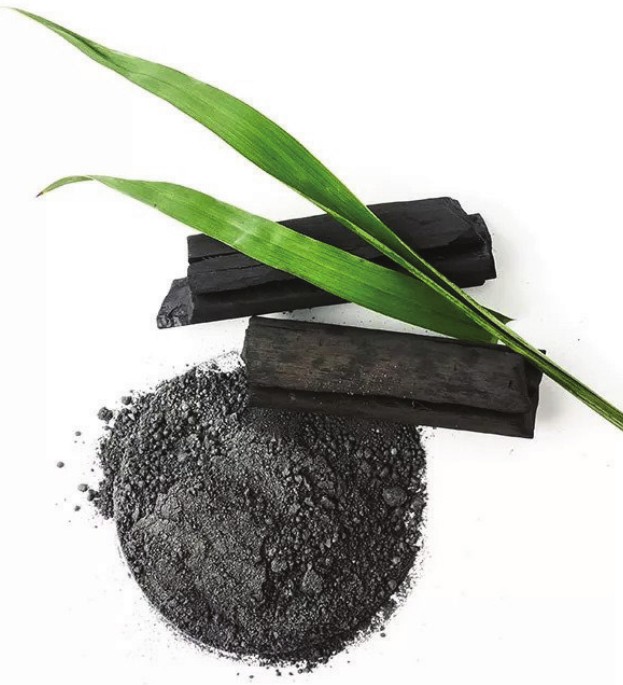
Activated carbon is produced from carbonaceous materials such as coconut, coal and wood. The charcoal is converted to activated carbon by treating it in a rotary kiln in a process known as steam activation: the material is heated at high temperatures while being treated with pressurised steam inputs.
Activated carbon taken out of the kiln is further processed for destoning and dedusting. Stoneless activated carbon is then passed through a gyro screener for particle size separation. It is often impregnated with silver and other materials to achieve different qualities in the removal of contaminants. Separated particles move to the packing centre and are packed to customer specifications.
How it is made
- Charcoal
Coconut shell or wood charcoal as raw material. - Steam activation
60 ft rotary kiln at 800-1100°C with pressurised steam. - Destoning and dedusting
Carbon from the kiln is cleaned. - Gyro screening
Particle size separation. - Packing
Packed to customer specification.
Advantages of coconut shell based carbon
- Hardest form of activated carbon available
- Highest micro porosity and surface area
- Very low attrition and dust levels, minimising the need for backwashing
- Ideal for absorbing volatile organic chemicals (VOC) from water and air
- Higher retentivity due to high micro porosity
- High purity, with total ash less than 4%
Why it works
Because of its highly adsorptive nature, activated carbon has a wide range of applications, from drinking water purification to air, biogas, food and pharmaceutical processing.